
Londolozi, and the Art of Staying Still
There's a particular kind of quiet that settles over the Sabi Sand in the late afternoon - not silence, exactly, but a held breath. The light goes syrup-gold over the granite outcrops, the bush starts to murmur with things waking up for the night shift, and for the first time since arriving, I stopped checking the time.
That's the thing about Londolozi. It doesn't perform for you. It waits for you to slow down enough to notice it.
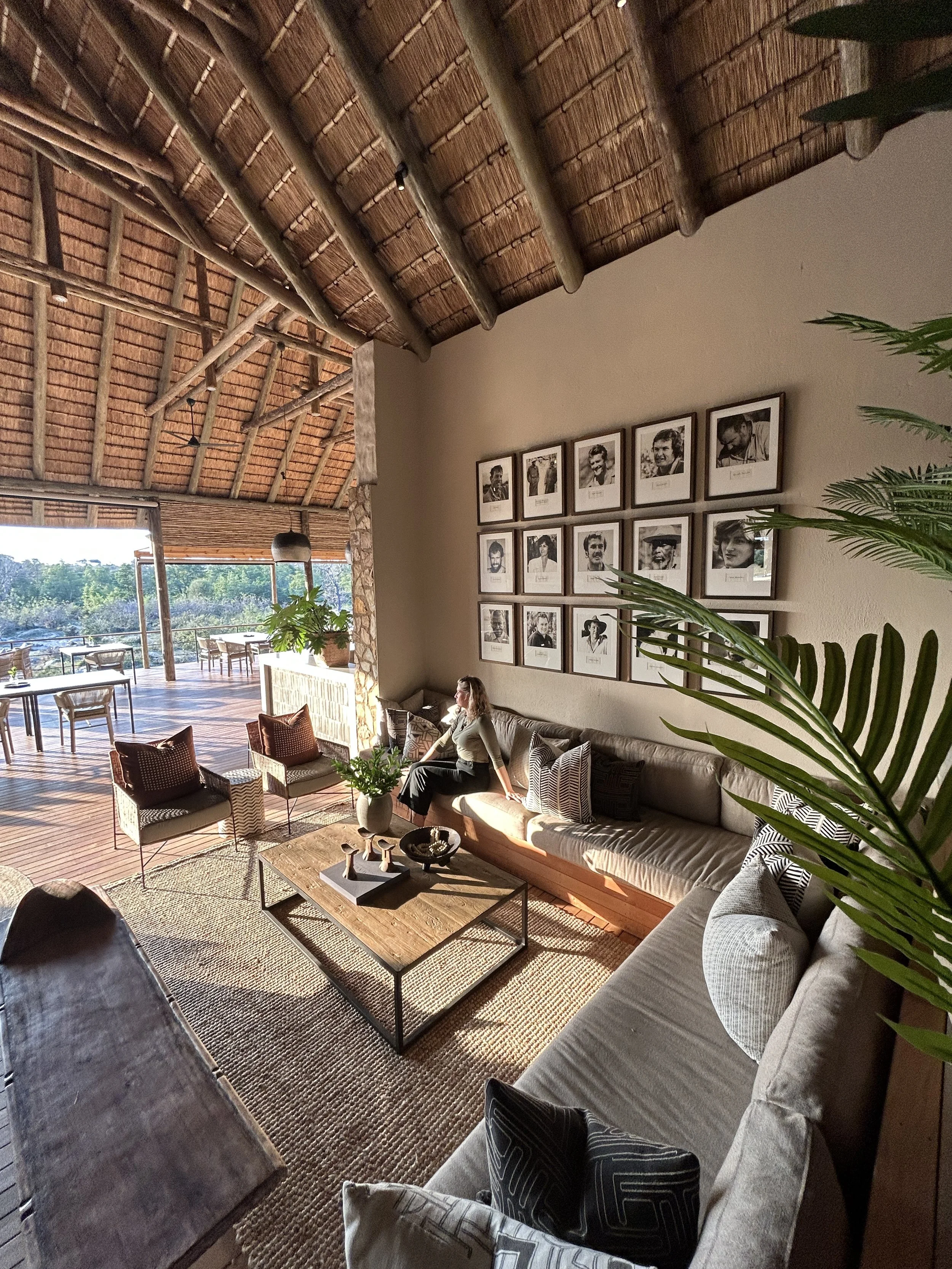
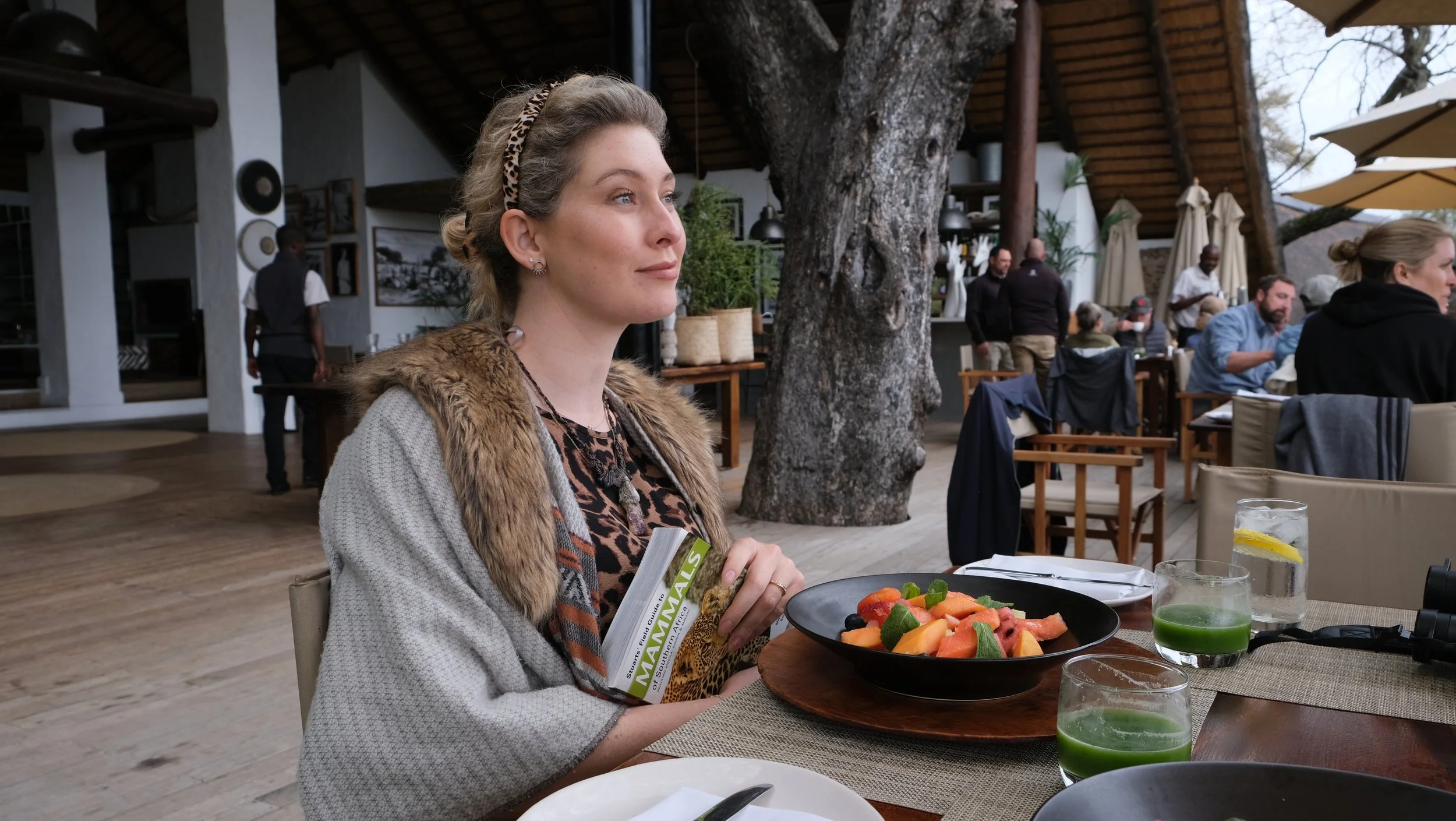
Sitting on the deck at camp.
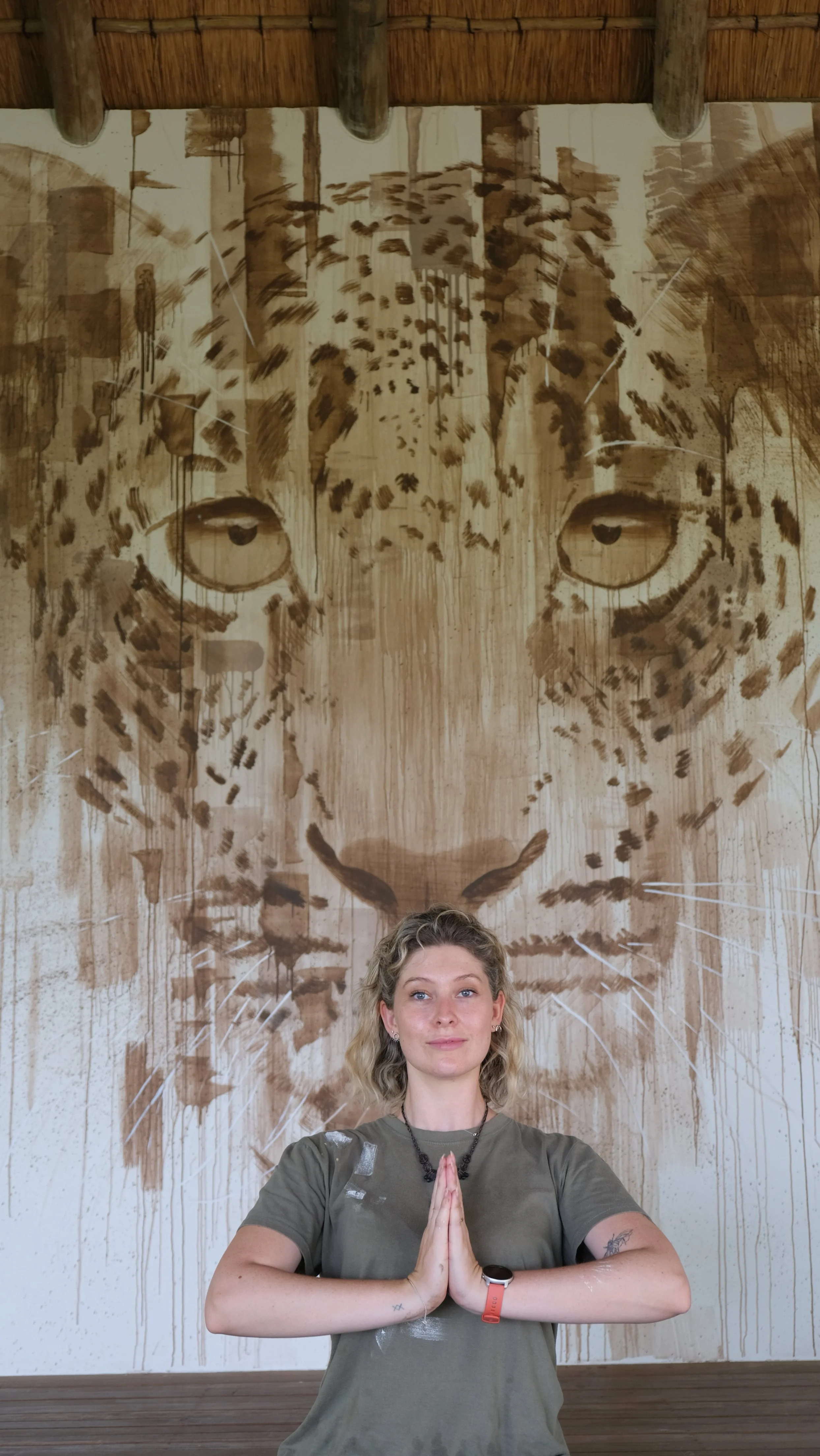
My husband, Stefan, had been invited to paint a portrait of Nelson Mandela at Londolozi - a project that turned into a month-long stay, and several large-scale murals across the camps and the village besides. We arrived to the warmest welcome at Varty Camp, where we'd be staying, the energy serene and unhurried even as we, quietly, buzzed with excitement.
The camp itself is an argument for restraint - a classic ode to thatch-and-timber safari architecture, given a modern sophistication that settles you seamlessly into the riverine bush. The view runs the river to the far embankment and off into distant plains, a sight to wake up to, or simply to sit with from the suite's private plunge pool. It felt built to disappear into the landscape rather than dominate it. Nothing about it asks to be photographed. It simply asks to be inhabited.
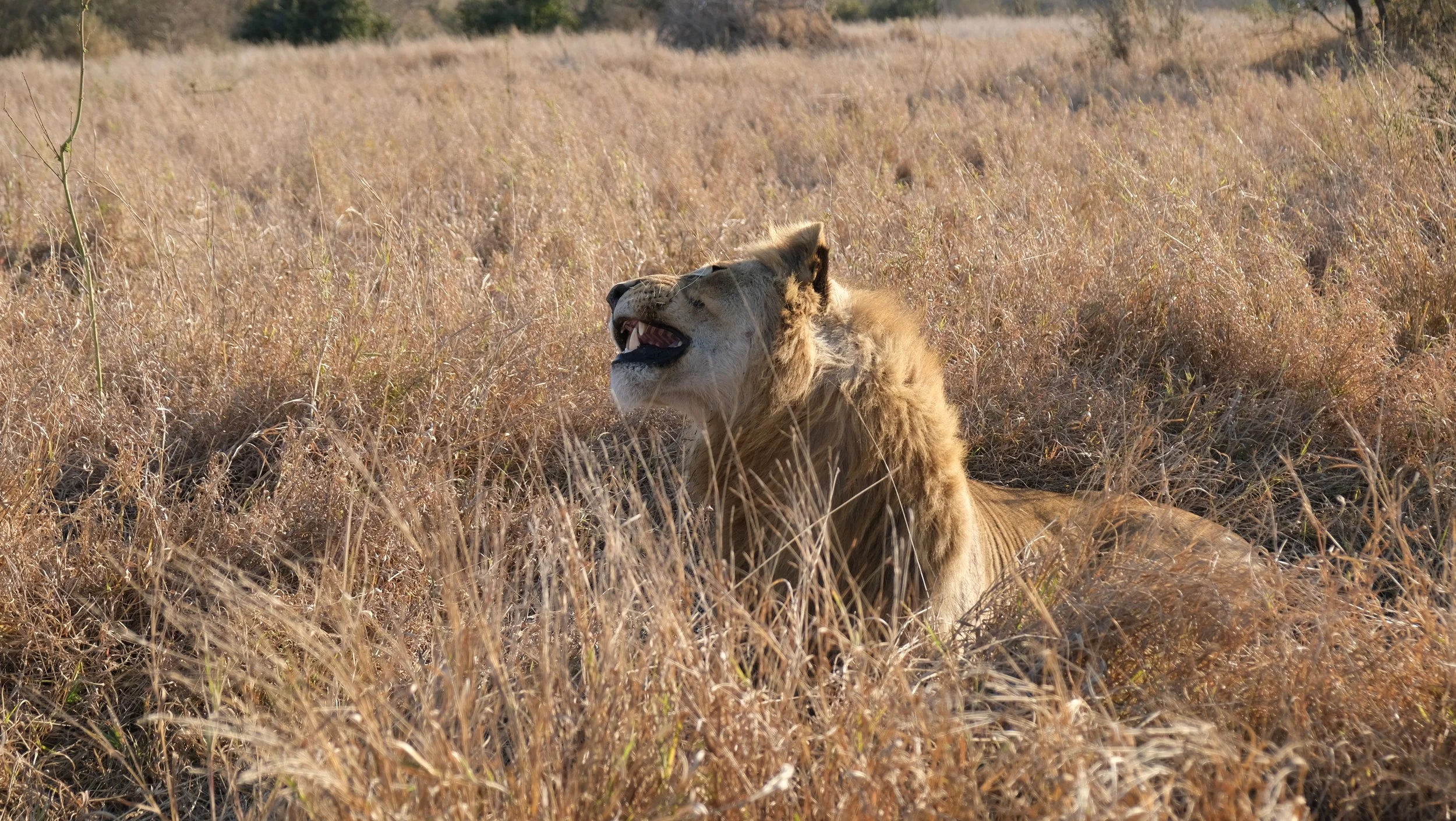
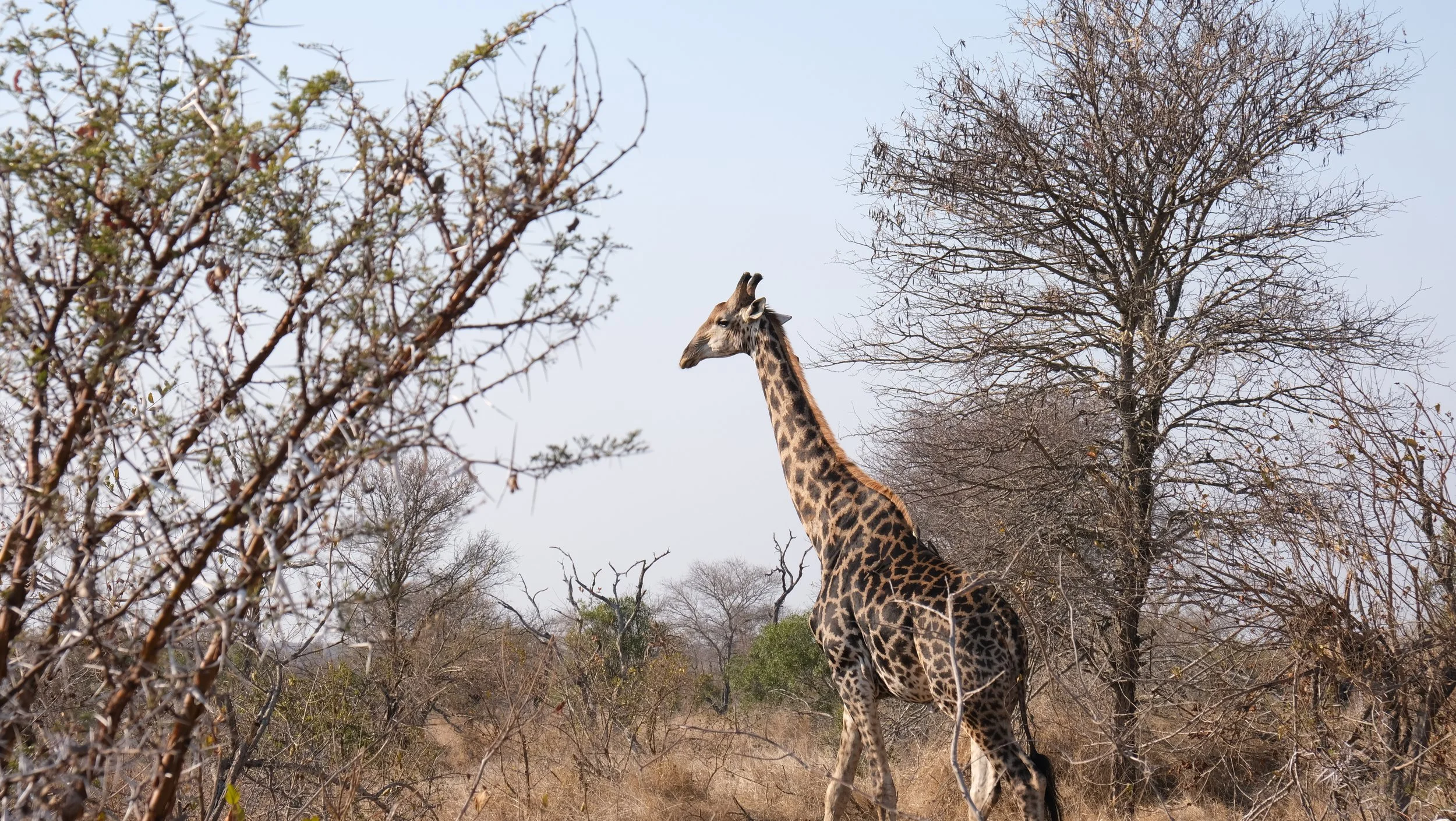
Mornings started before the sun did - coffee in the dark, the Land Rover still cold, breath fogging over the rim of the cup. There's a discipline to game drives that I've come to love: you go out with no promises, no itinerary beyond see what's there. And Londolozi doesn't disappoint. It's the leopards, of course, that this place is known for - this stretch of the Sabi Sand has produced more relaxed, closely studied leopard sightings than almost anywhere else on the continent, generations of the same bloodlines moving through the same drainage lines their mothers and grandmothers used.
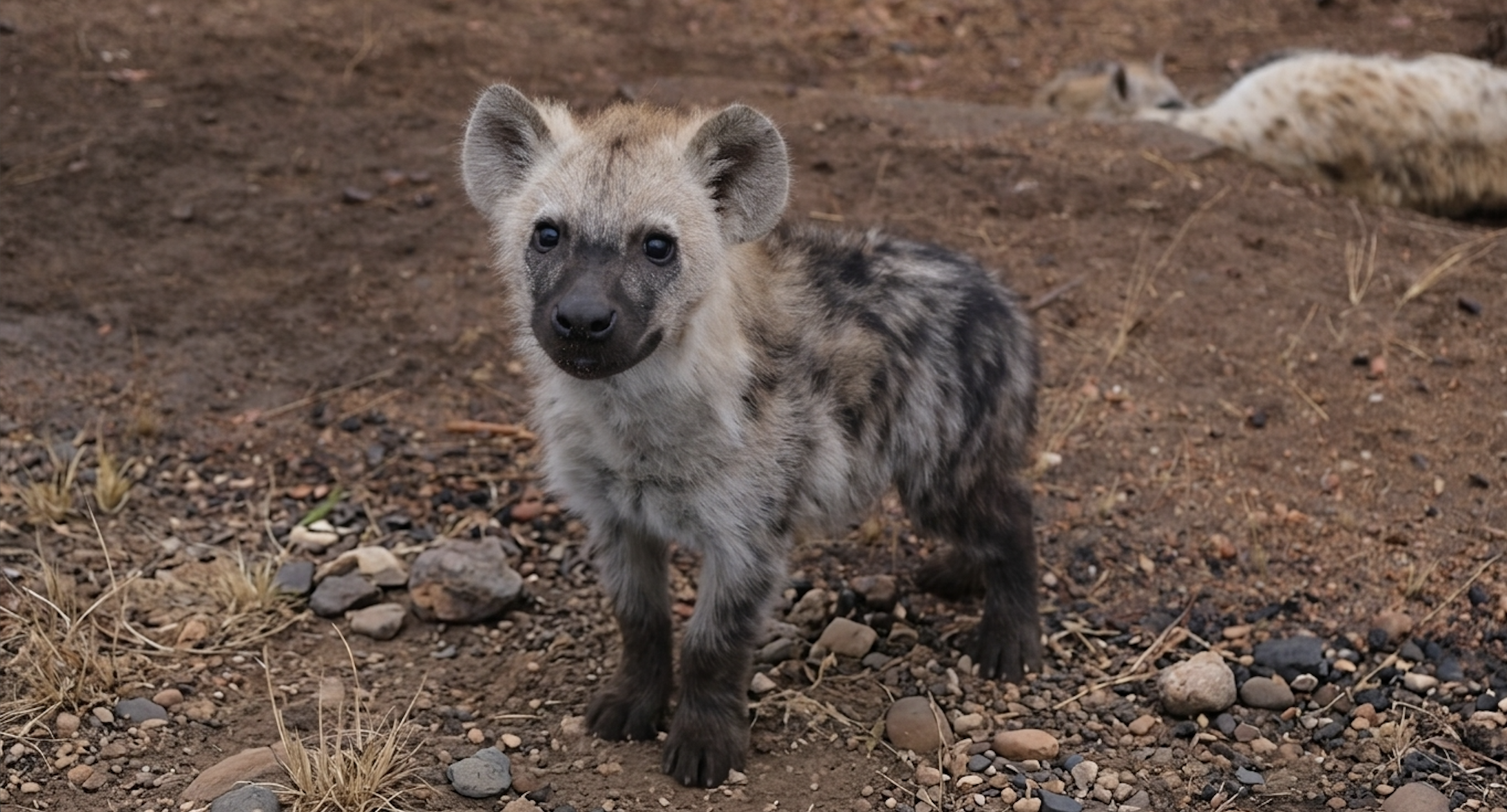
Our first morning out gave us more than we bargained for. We found a male leopard on a young wildebeest just outside camp - a kill made moments before we arrived - and an encroaching hyena already calling in the clan. A challenge was brewing. The leopard, spent from the takedown, faced a familiar dilemma: the kill was too large to hoist into a tree, out of reach the way leopards usually keep their prize, and the hyena's calls meant reinforcements were only minutes away.
What happened next has stayed with me. Knowing the battle wasn't his to win, the leopard simply began to share. Both animals fed side by side, each taking what they could while they could - survival, it turns out, is a calculated risk. The moment the hyena realised he'd been let in, he went quiet - no more calls to give away the location, no reason to signal a share that was shrinking with every passing minute - and gorged as fast as he could, while the leopard did the same at his end of the carcass.
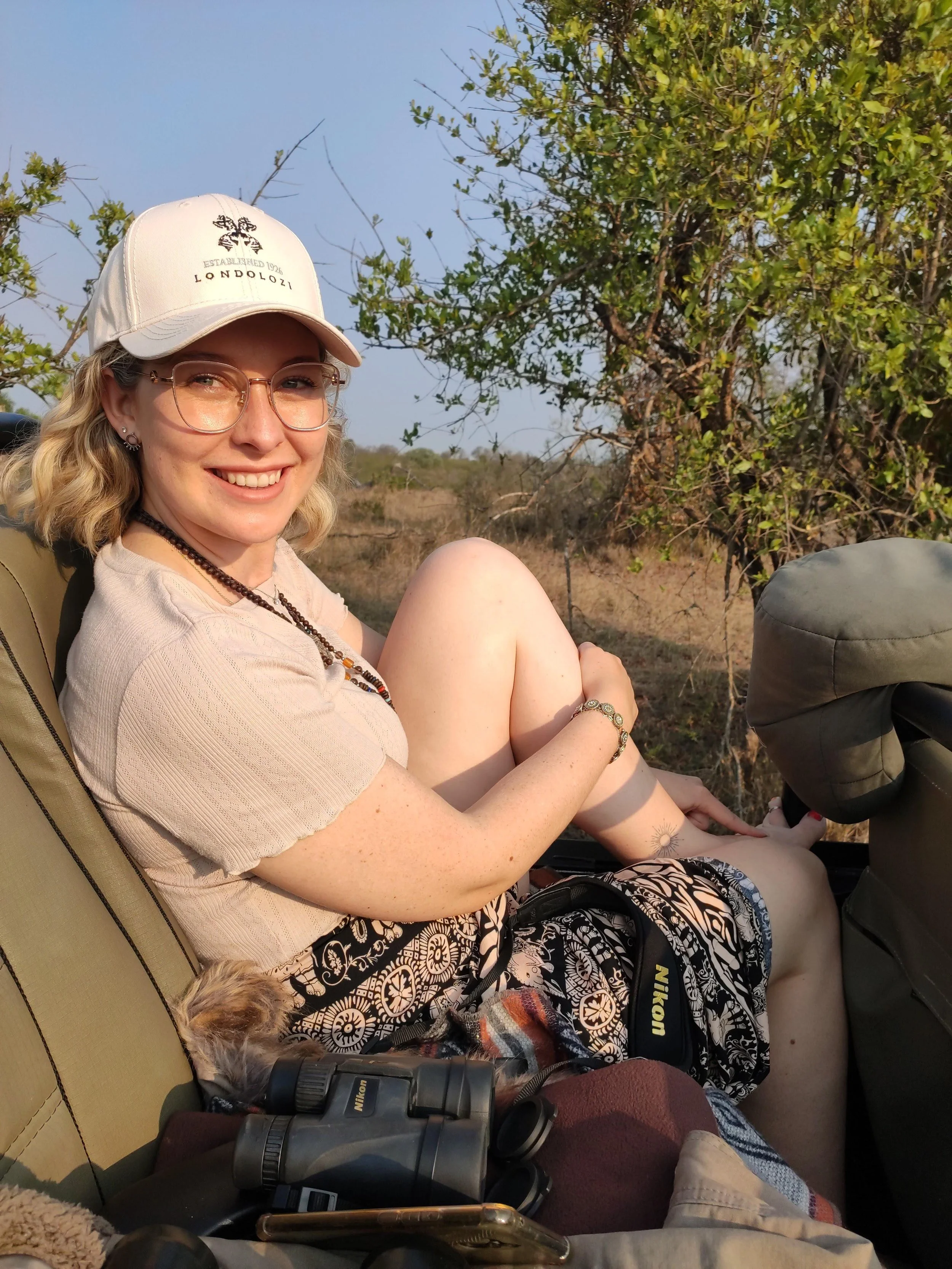
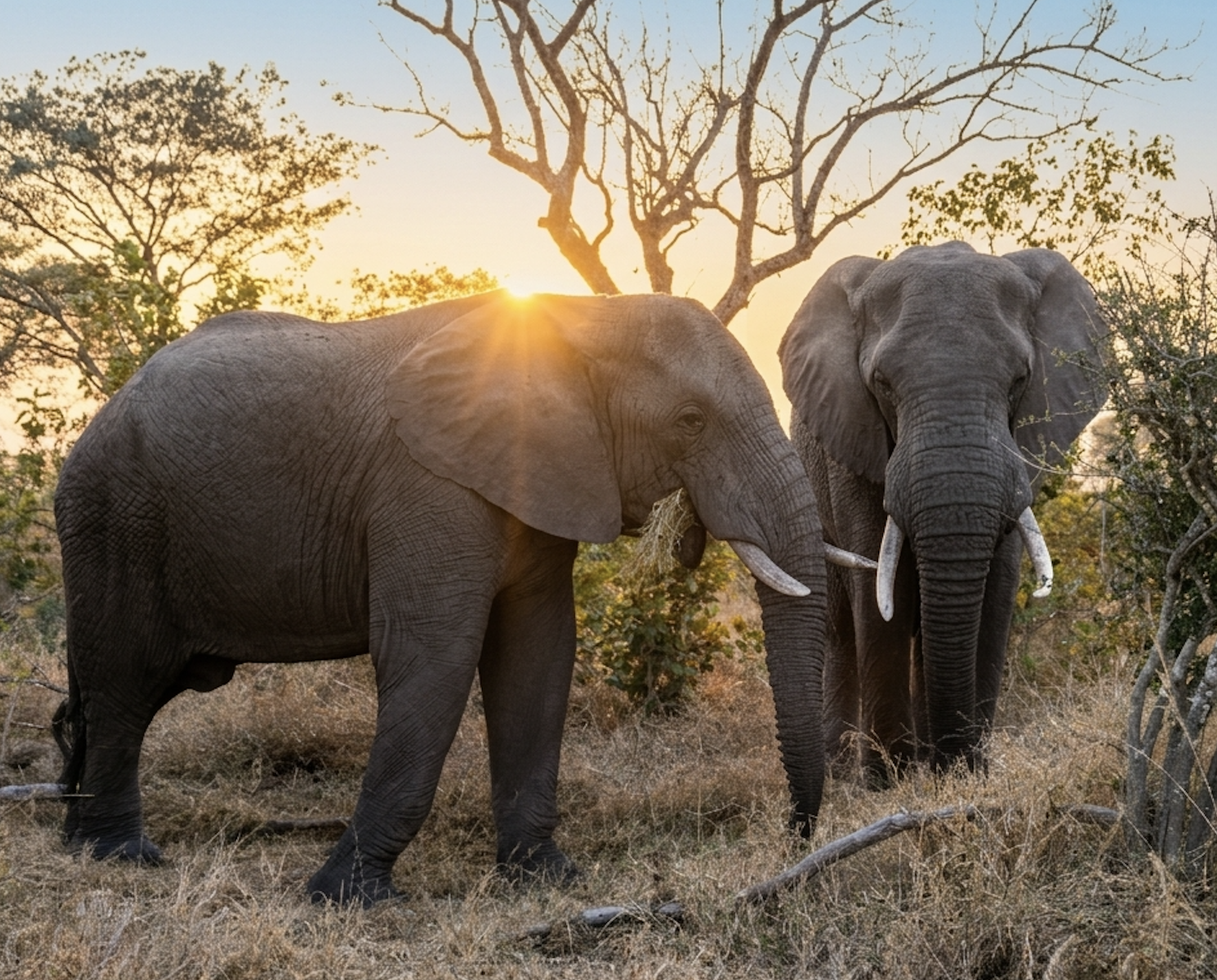
Evenings dissolved the way they do in the bush - sundowners on a riverbed that would be gone in the next flood, the bush changing shift audibly around us, dinner under more stars than a city sky ever admits to holding. Stefan and I had married not long before, our honeymoon derailed by circumstance beyond our control - so when we sat that night in the boma, dust underfoot, candles and lanterns flickering around us, it felt like an unexpected, welcome do-over for the honeymoon we never had.
I keep coming back to the same thought: that the best luxury I've ever found has never been about more. It's been about less, done properly. Fewer decisions. Fewer distractions. A room built to get out of the way of the view. A schedule built to get out of the way of the day.
Londolozi does that as well as anywhere I know.
When we left, I felt renewed - a month in the wild does that. Days on the yoga deck, nights in the pool under the stars, the salt chamber, the cold plunge, the raw stillness of the first birdsong each morning - it added up to something like a reset. A chance to come back home to myself, by coming home to the wild.
